

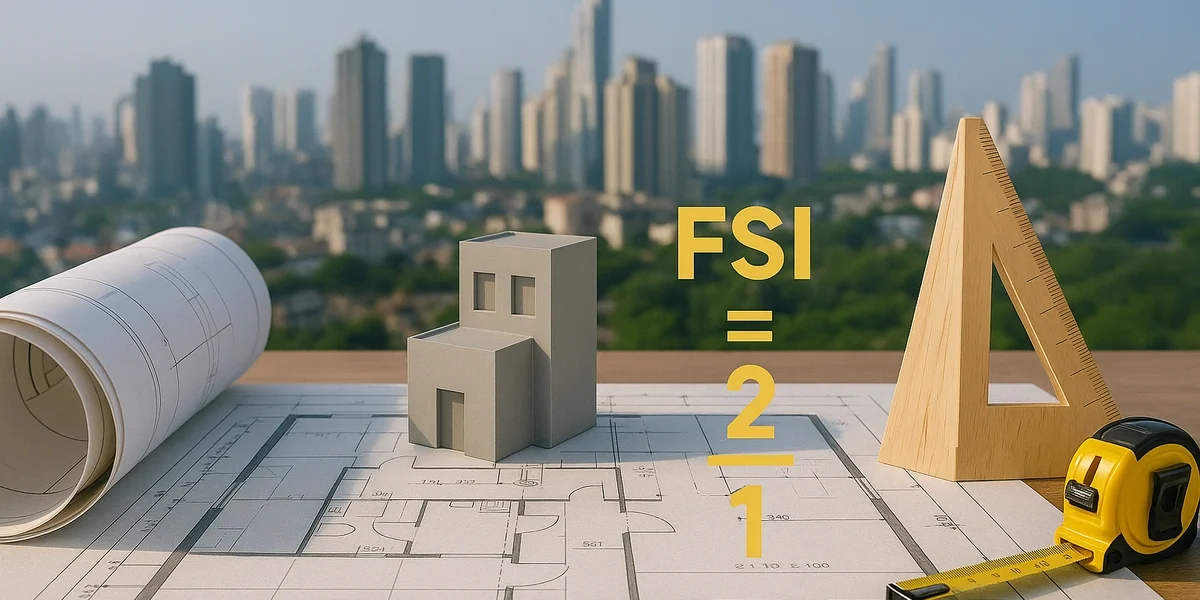
The Floor Space Index (FSI) calculates the maximum built-up space allowed on a plot by dividing the total floor area by the land size. It is critical to urban planning, zoning, infrastructure management, and property assessment.
Knowing FSI enables investors and developers to optimize space while adhering to local standards and assuring long-term growth. Buyers, developers, and investors must comprehend FSI and its ramifications.
This information aids in assessing a property’s potential, adhering to building codes, and making wise choices.
A key concept in real estate is Floor Space Index (FSI), sometimes referred to as Floor Area Ratio (FAR). It appears during real estate deals and is extremely significant.
To put it simply, FSI is the largest floor area that a developer is permitted to build on a given plot of land. It is the proportion of a building’s built-up area to the total land area.
FSI varies according to the rules established by the governing body of the city.
Calculation of FSI
FSI is calculated using the formula:
FSI = (Total Covered Area on All Floors) / (Gross Plot Area)
For instance, if a plot of land measures 1000 square meters and the permissible FSI is 2, the construction allowed on the plot would be:
Total Construction Area = FSI × Gross Plot Area
Total Construction Area = 2 × 1000 = 2000 square meters
What is Premium FSI?
Another idea connected to the Floor Space Index (FSI) in real estate is Premium FSI. If developers pay a fee, they can surpass the typical FSI limits. Increased construction rights above those of standard FSI are possible with premium FSI. This makes it possible for developers to create bigger structures and optimize a property’s potential.
Benefits of FSI Regulation
Regulating FSI keeps cities balanced. It avoids overcrowding, ensures that green spaces and social facilities remain, and prevents stress on roads and utilities. It also helps developers and buyers by making rules transparent. In the long run, proper FSI regulation increases liveability, keeps neighborhoods healthy, and maintains property values.
Factors Impacting FSI
1) Plot Size: The plot size defines the potential FSI.
2) Type of Building: The FSI allowances vary depending on the building type (residential, commercial, etc.).
3) City Regulations: What goes into FSI calculations is determined by city regulations and bylaws.
Understanding FSI is crucial for anyone involved in the real estate sector. It provides insights into the development potential, compliance with regulations, and optimal utilization of available land. By grasping all aspects of the question ‘What is FSI’, it is easier to make informed decisions, contribute to sustainable urban development, and achieve real estate goals.
Also read- Ten Things to Know Before Buying a Flat in Mumbai